Exploring Creativity
Play makes room for possibilities. When we make marks, experiment with materials or follow ideas, we can loosen the need to get things right and become curious about what happens next, growing trust in our own responses.
Reading about other people’s work and process, and spending time with their artwork can open up possibilities too. We might notice what draws us in, what challenges us or what connects with our own experience. Reflecting on these responses can help us develop our own ideas and ways of making.
Creative exploration can give feelings a form before we have words for them, offer a fresh perspective or simply bring pleasure in the making. If we take the pressure off ourselves to make something worthy, we might discover something about ourselves through the process, the images that emerge and what holds our attention. Sometimes it’s absorbing; sometimes it’s messy, ugly or just good fun!
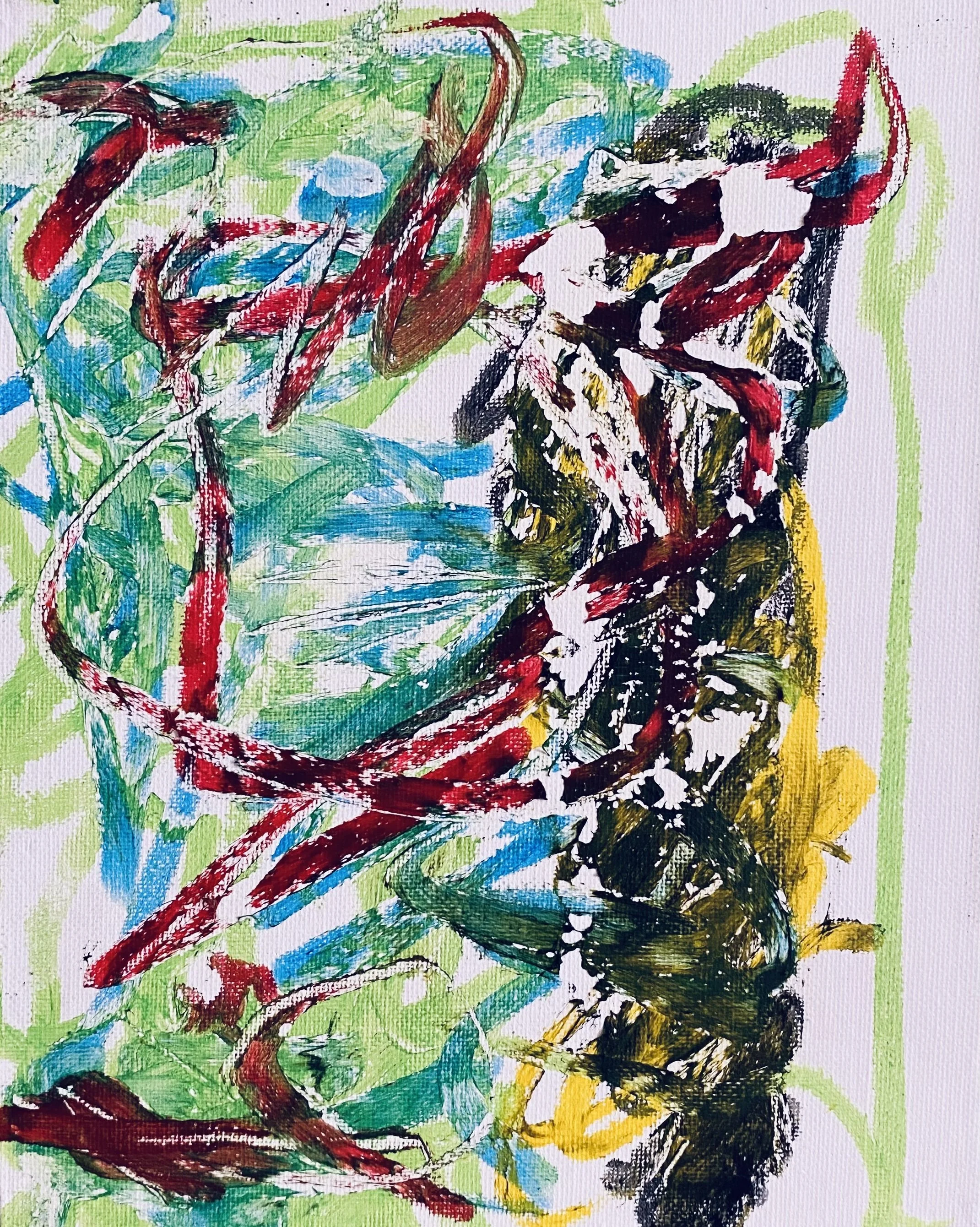
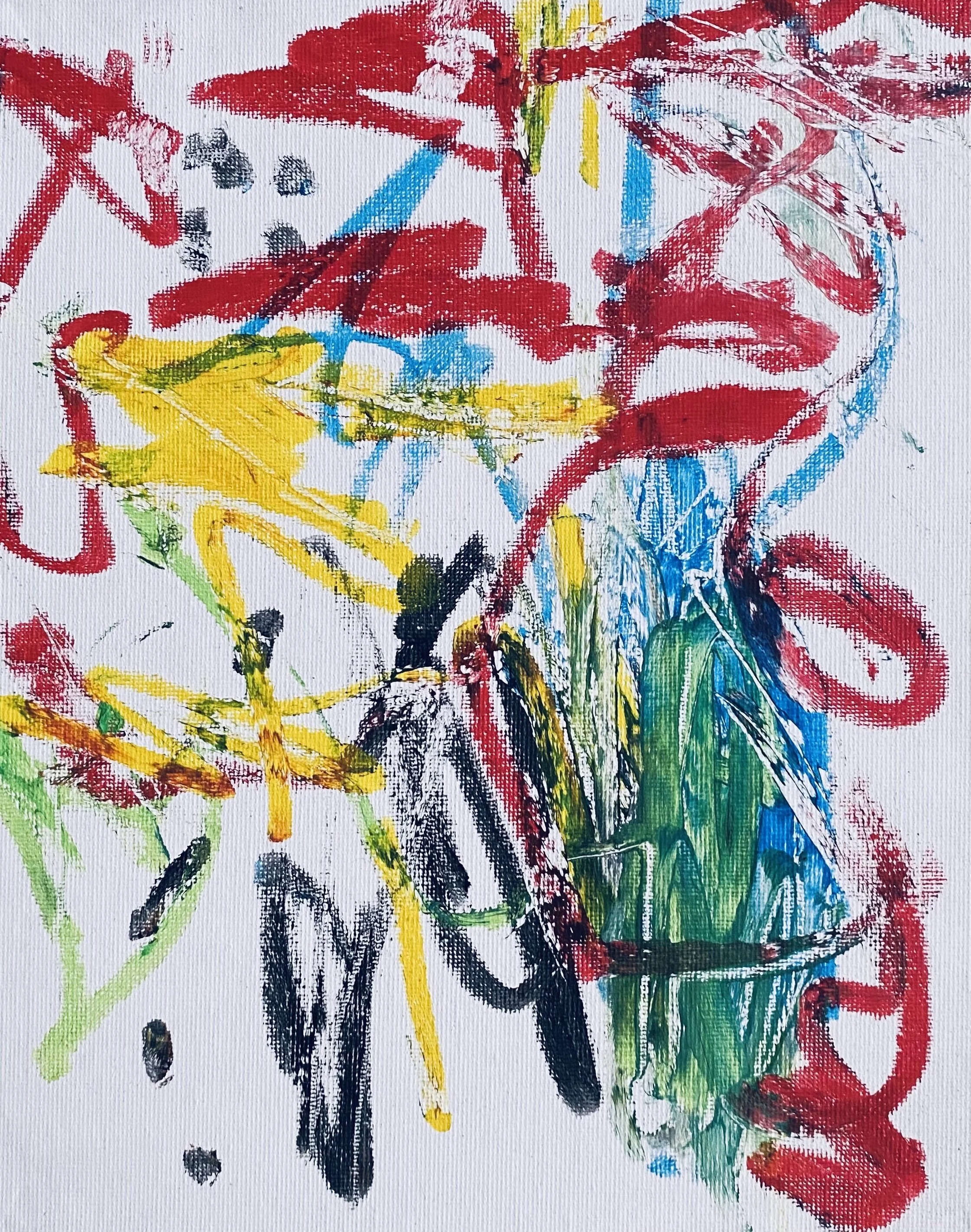
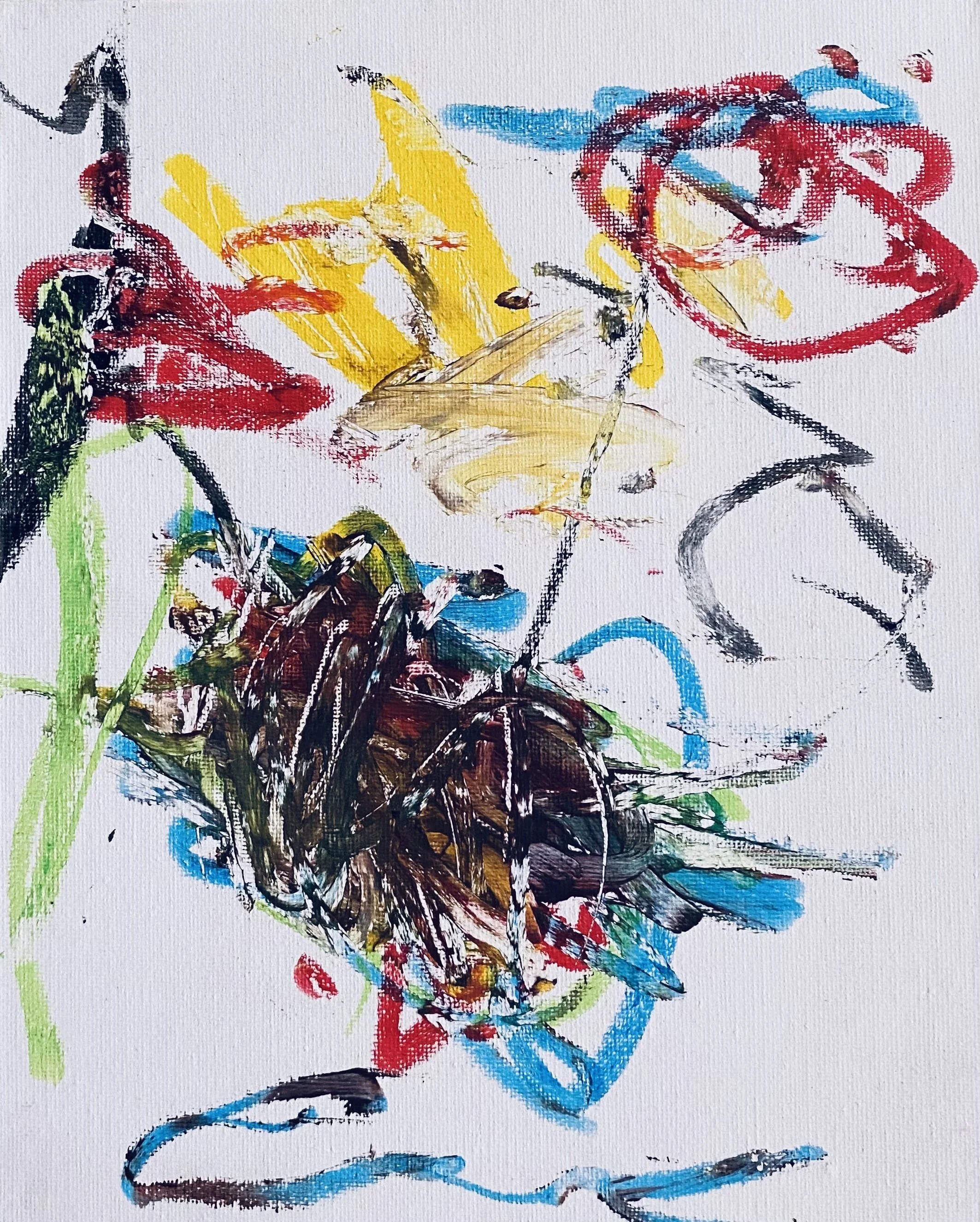
— Saskia aged 2. Crayons on canvas board, 2026
“It is in playing and only in playing that the individual child or adult is able to be creative …”
— D. W. Winnicott, Playing and Reality
This page is an invitation to play, to pause, read and explore ideas to find practical ways to bring creativity into everyday life. Visit my blog on my psychology website for reflections on creativity, amongst other topics, or scroll down for recommended books and useful resources for art-making, reflective writing and personal exploration.
Drawing on my work as an artist and psychologist, I share what I find thoughtful, useful or worth trying. Follow your curiosity and see where your creativity it takes you.
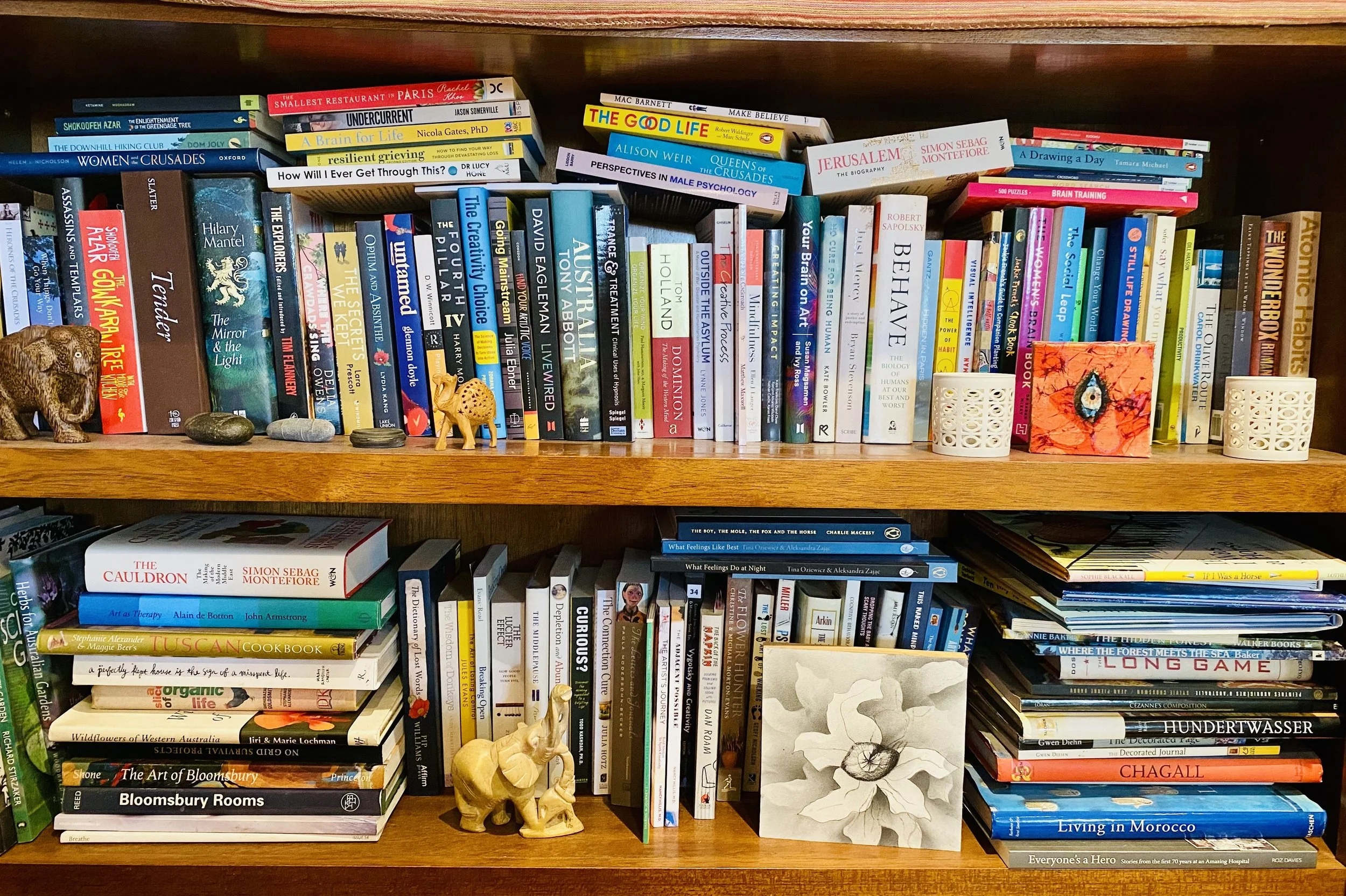
Books for Creative Practice & Reflection
Books to spark curiosity, encourage experimentation and make room for reflection. Explore ideas you can bring into your own creative practice, wherever you’re starting from. This was a challenge to restrain - it is in fact a never ending list …
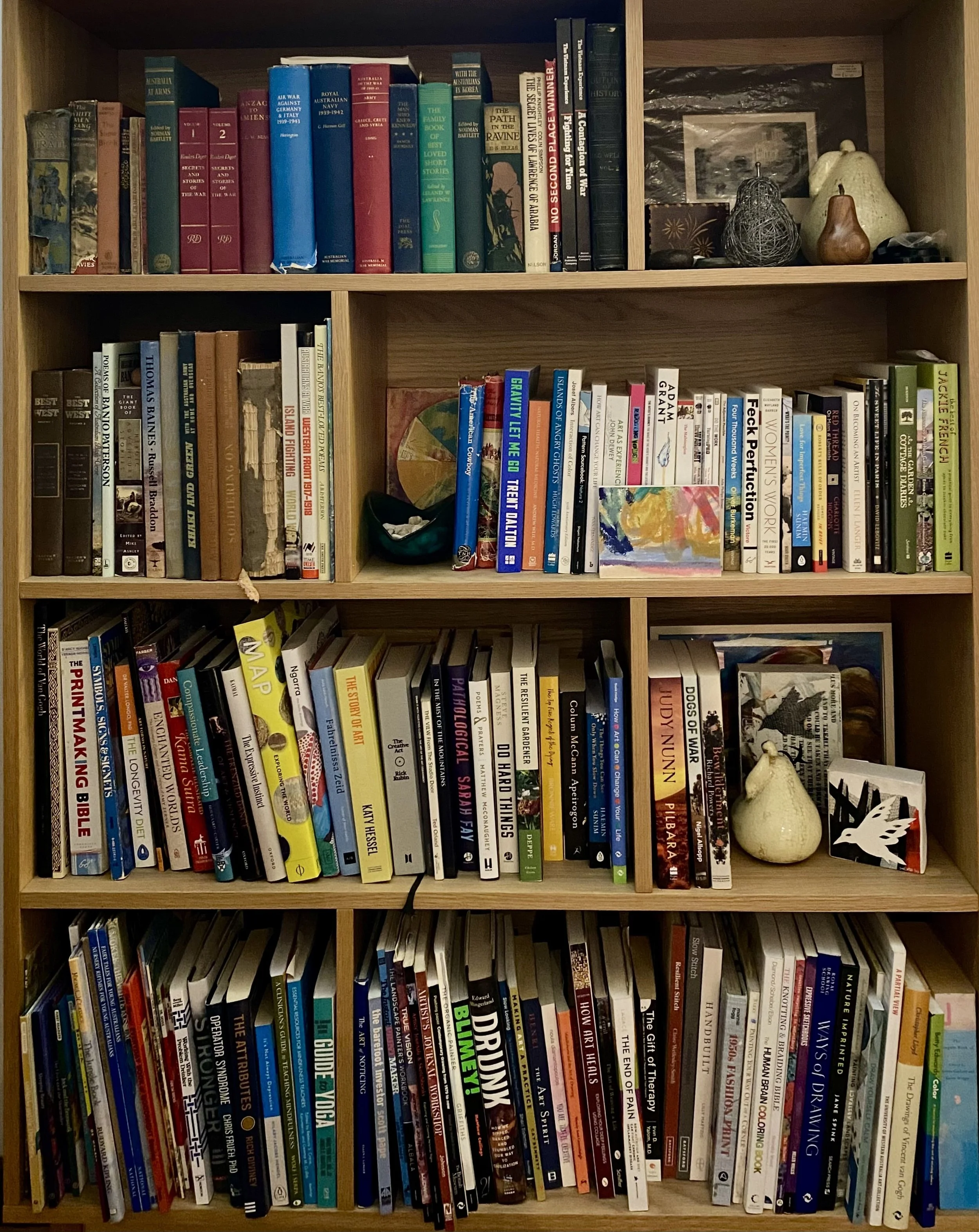
Slow LookingThe Zen of Seeing: Seeing/Drawing as Meditation ~ Frederick Franck: a handwritten, illustrated exploration of drawing as attentive seeing.
The Art of Botanical Drawing ~ Agathe Ravet-Haevermans: an illustrated practical guide to observing and drawing flowers, leaves and other plant forms.
The Elements of Drawing ~ John Ruskin: a classic approach to drawing and close observation.
Slow Looking: The Art and Practice of Learning Through Observation ~ Shari Tishman. An exploration of how sustained observation deepens understanding, with practical approaches to looking closely at art, objects and the world around us.
Exploring Through DrawingA Life in Hand: Creating the Illuminated Journal ~ Hannah Hinchman: combines writing and illustration to make a journal a place for noticing and recording life. First published in 1991.
Drawing on the Artist Within ~ Betty Edwards: her less obvious alternative to Drawing on the Right Side of the Brain, exploring drawing, imagination and creative thinking.
The Natural Way to Draw ~ Kimon Nicolaïdes: a traditional, exercise-based approach to learning through drawing. Better suited to sustained practice than quick journal prompts.
The Laws Guide to Nature Drawing and Journaling ~ John Muir Laws’ practical drawing instructions combining close observation with nature exploration.
Creativity, Play & the Inner LifeOn Not Being Able to Paint ~ Marion Milner: a psychoanalyst’s exploration of her own difficulties with painting, and what making images reveals about inner experience.
Free Play: Improvisation in Life and Art ~ Stephen Nachmanovitch: explores spontaneity, play and the creative process across art and everyday life.
Centering: In Pottery, Poetry, and the Person ~ M. C. Richards: an unusual meeting of craft, poetry and personal reflection, first published in 1964.
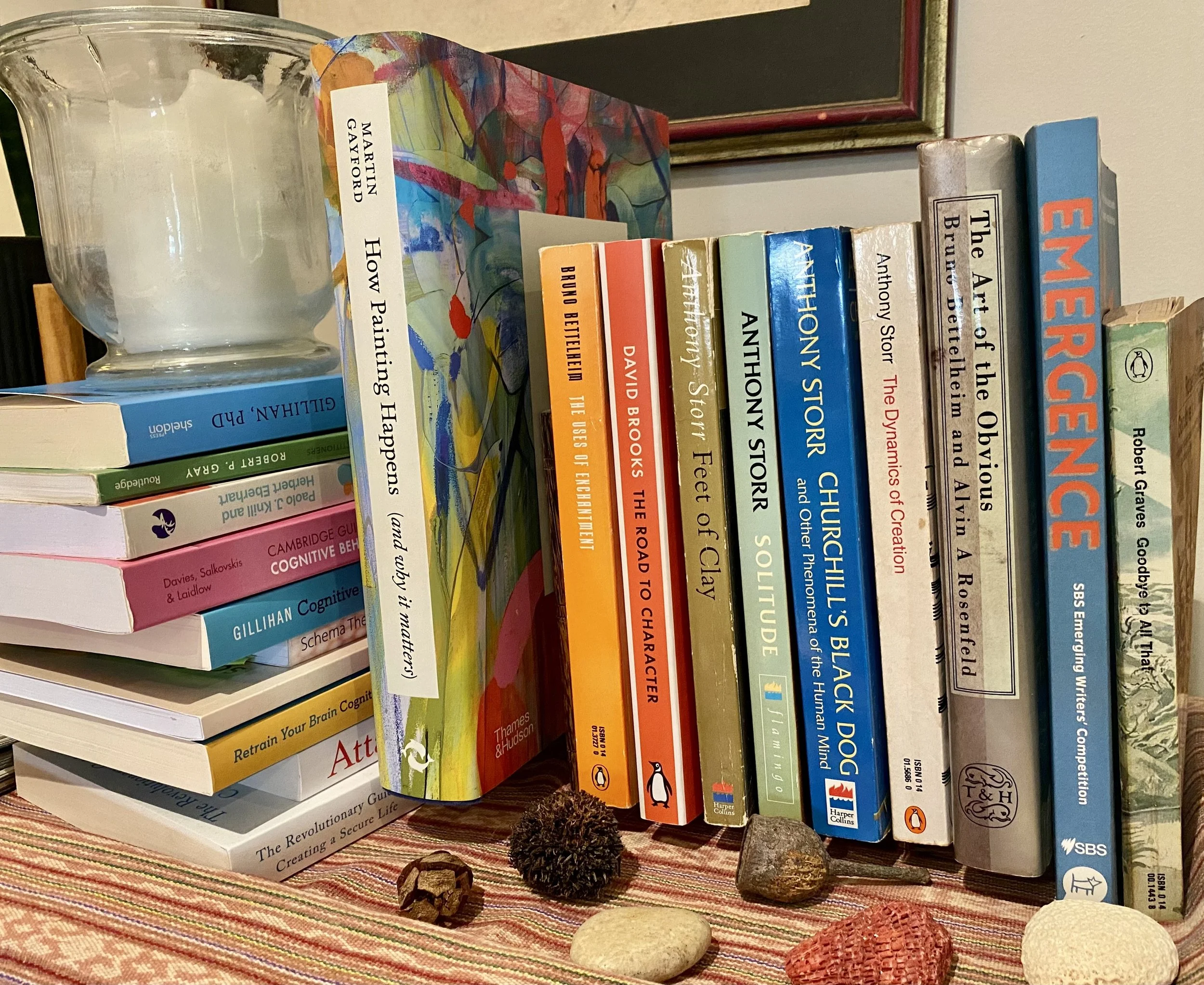
The Dynamics of Creation ~ Anthony Storr is a psychiatrist’s exploration of creativity and its relationship with inner conflict, personal experience and the need to make art.
Artists to Spend Time With
Books that invite a closer look at an artist’s world: their marks, materials, working thoughts and ways of seeing. Some names may be familiar; others to be discovered. Explore …
An illustrated overview of Cy Twombly’s work, with essays exploring his use of drawing, colour, handwriting and references to poetry and classical mythology.
The Essential Cy Twombly — edited by Nicola Del Roscio
An illustrated exploration of an independent artist whose paintings reward slow looking and close attention.
Gwen John: Art and Life in London and Paris — Alicia Foster
Paintings alongside writings and personal recollections, a way into her restrained visual world and thinking.
Agnes Martin: Paintings, Writings, Remembrances — Arne Glimcher
Roger Hilton: The Figured Language of Thought — Andrew Lambirth
A less obvious artist to explore for expressive drawing and the movement between abstraction and figuration.
Mirka Mora: A Life Making Art — Sabine Cotte
An illustrated account of Mirka Mora’s life and artistic practice, exploring her techniques and materials across painting, drawing, embroidery, soft sculpture and mosaics.
What Can Reading Offer Us?
Books can help us recognise an experience, encounter another perspective or find words for something we’ve struggled to express. Explore how reading can become part of reflection and psychological work on my psychology website.
Useful Resources for Making & Exploring
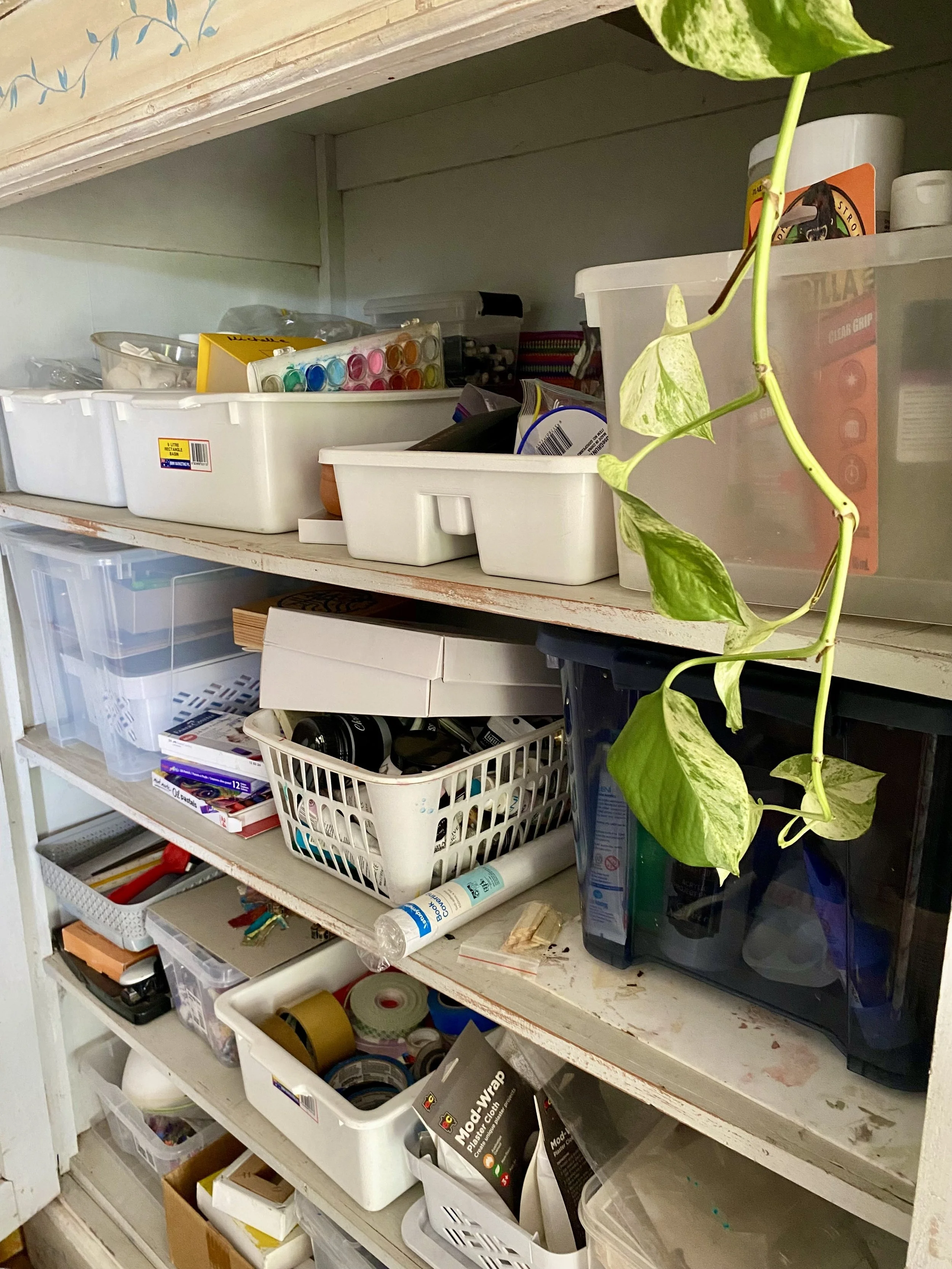
You don’t need a cupboard full of materials to begin. A sketchbook and pencil are enough; but explore the lists below if you’d like a few more options.
-
A place for drawings, words, scraps and experiments. Start with what you have and let the pages become your own.
An unlined notebook or sketchbook: inexpensive is fine, you want to feel comfortable using it.
A pencil: for drawing, writing and following an idea.
A few crayons or coloured pencils: loose ones from an old pencil case work perfectly.
A black pen: for outlines, notes or patterns.
A glue stick: for adding pictures, paper scraps and little reminders.
Old magazines, envelopes or wrapping paper: for collage, unexpected colours and starting points.
-
A small kit for looking closely and recording whatever catches your attention. A leaf, a shadow or an interesting bit of bark can be enough.
A small sketchbook: easy to carry and rest on your lap.
A pencil or ballpoint pen: take whichever you enjoy using.
A few coloured pencils: enough to capture a colour or try an unlikely combination.
A sharpener with a container: keeps pencil shavings out of the landscape.
A piece of sturdy recycled cardboard: a simple drawing support for loose paper.
An old pencil case or pouch: keeps everything together, ready for a wander.
-
A few inexpensive ways to explore colour, texture and happy accidents. Pick one or two rather than buying everything.
A basic watercolour set: for washes, puddles of colour and seeing how colours mingle.
A brush and reused water container: a clean yoghurt tub works well.
Wax crayons: draw first, then paint over them to explore how wax resists watercolour.
An old sponge: for dabbing, stamping and making uneven textures.
Scraps of coloured packaging: tear and layer them into a collage.
A scrap of thick cardboard: use its edge to drag paint or make lines.
-
A small collection of things you might otherwise throw away. Try combining unlikely materials and let the making take its own direction.
Clean cereal boxes: for drawing surfaces, little sculptures or handmade postcards.
Old magazines and catalogues: cut or tear out colours, textures and unexpected combinations.
Paper packaging: crumple, fold, draw on it or use it for printing.
Fabric offcuts: add texture to a collage or make a small flag.
An old sponge: cut into shapes for stamping with washable paint.
A glue stick and scissors: enough to turn your collection into something new.
-
Everyday materials for making, imagining and seeing what happens. Follow their ideas, there’s no finished product to aim for.
Scrap paper and old envelopes: for drawing, folding or making tiny books.
Crayons or washable markers: for colourful marks, invented creatures and shared drawings.
Cardboard boxes and tubes: turn them into buildings, puppets or something nobody has named yet.
Homemade playdough: for squashing, shaping and starting again.
Scraps of fabric or yarn: for costumes, collage and imaginary landscapes.
Washable glue and age-appropriate scissors: for joining things together and changing their shape.
Choose materials to suit your child’s age, keeping small pieces out of reach of children who still put things in their mouths.
-
Inspired by one of my favourite artists, Cy Twombly, explore wandering lines, scribbles and fragments of handwriting. Try different speeds and pressures, letting marks overlap without needing them to become a recognisable picture.
Large sheets of scrap paper: try the plain side of wrapping paper or opened-out paper bags.
A soft pencil: for faint trails, dark tangles and everything between.
Wax crayons or oil pastels: use whatever colours you already have.
A ballpoint pen: for looping lines, repeated marks and almost-readable words.
White washable paint and an old brush: lightly cover an area, then add fresh marks once dry.
Scraps of handwritten notes: tear and layer them into your drawing, using copies if the originals matter to you.
Try drawing to music, switching hands or letting one line travel across the whole page.
Putting Your Materials to Use
A journal can hold drawings, words, scraps and unfinished ideas. Visit my creativity and journaling page on my psychology website for ways to begin and explore how these practices might support you.
“It took me four years to paint like Raphael, but a lifetime to paint like a child.”
— Attributed to Pablo Picasso